

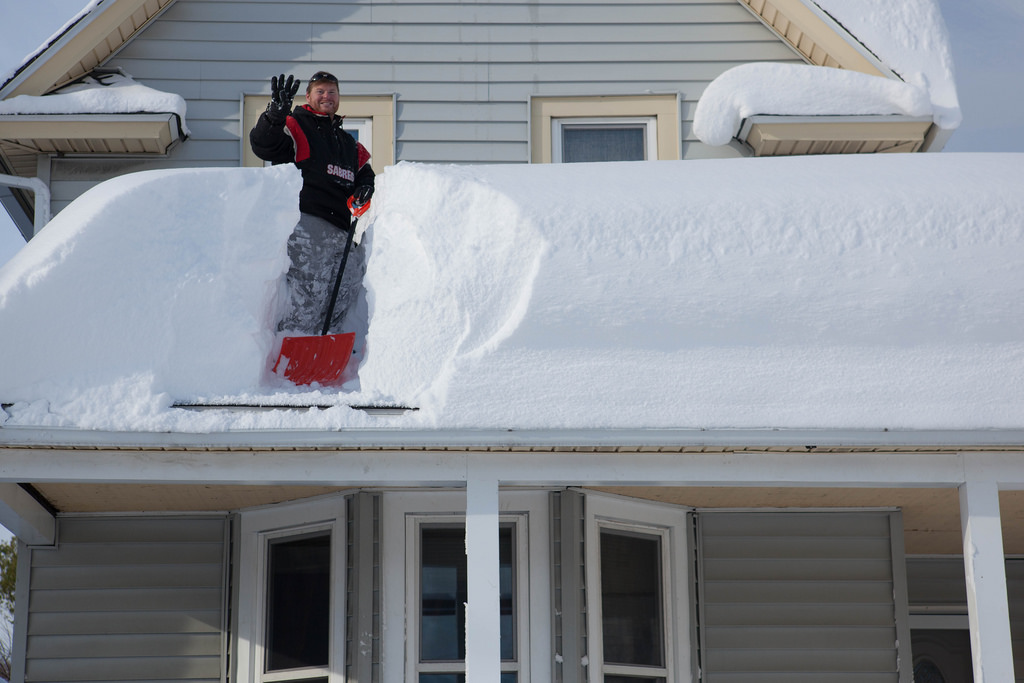
It is not just heavy snow which sits on your roof. It increases mass, it retains water, and it forces weak materials to their limits. Damage will not normally appear immediately. It begins as a small trickle, and then expands as temperatures warm up and snow starts to melt. This is precisely why snow damage repair should never be put off. Taking action early helps avoid problems with solutions that get deeper and more expensive.
How a Home is Really Damaged By Snow
Snow has a quiet destructive power. As it builds up, it becomes heavy and burdensome to roofs and gutters. Water goes in when it melts and freezes again at night. The freeze thaw cycle widens small cracks and causes materials to break down and the material fails.
Some of the usual issues that require snow damage repair involve:
- Cracked or missing shingles
- Water under the roof might be ice dams
- Bent or detached gutters
- Moisture leaking into attics or walls
When you know what causes these, you fix the actual problems and not just the symptoms.
Warning Signs You Shouldn’t Ignore
Most homeowners will wait until spring to search for damage. Or, by then, it could be too widespread of an issue. The trick is finding the symptoms early.
Watch for:
- Water stains on ceilings
- Peeling paint near rooflines
- Sagging gutters
- Uneven roof lines
- Drafts or cold spots upstairs
These should be some indications to start with snow damage repair ahead of the snow damage worsens.
Why Quick Repairs Matter
Snow damage rarely fixes itself. It even gets worse as the temperature rises. Meltwater travels deeper. Materials stay damp. This is the time mold and rot start becoming a real threat.
Fast snow damage repair is a way that helps you for:
- Stopping water from spreading
- Preventing structural weakening
- Reducing mold risk
- Lowering long-term repair costs
An early repair tends to be a simple repair.
Focus on the Roof First
Winter is hard on the roof more than anything else. Shingles and decking are stressed by snow load. Ice dams block drainage. It means interior damage is bound to follow.
Getting out there, doing it after you get the snow cleared step one of snow damage repair is often:
- Replacing damaged shingles
- Fixed flashings at or above vents and chimneys
- Clearing blocked drainage paths
- Reinforcing weakened sections
Repairing it secures the roof of the whole house.
It’s Not Just the Roof − Gutters and Drainage
Gutters guide meltwater safely away. They sag or come away from the roof under the weight of snow, allowing water to spill over, and refreeze at the edge of the roof.
When repairing snow damage, gutters must be as follows:
- Re-secured or replaced
- Properly sloped
- Cleared of debris
Healthy drainage prevents repeat damage.
Same Goes for Your Interior Repairs
Snow damage doesn’t stop outside. Insulation can absorb water, ceilings can develop stains, and drywall can be weakened by water. Ignoring the signs inside leads to mold, and air quality issues.
Repairing snow damage inside the building may involve drying or replacing insulation, sealing air leaks, and replacing ceiling materials. They’re making sure that both sides of the problem are being fixed, ensuring it doesn’t come back next winter.
When the Smart Bet is Seeking Professional Help
Other damage is subtle: structural stress, moisture hiding between layers of insulation, roof deck failure − to identify these issues typically requires an expert. If leaks are ongoing or damage looks widespread, then professional assistance speeds up the process and saves money.
Final Thought
Mellowing snow harm accumulates modestly and develops shortly. Waiting only increases the cost. Repairing snow damage to your roof in a timely manner helps protect your home, and in turn, helps protect your peace of mind. Taking action early prevents the winter damage from getting worse and becoming a year-long problem.