

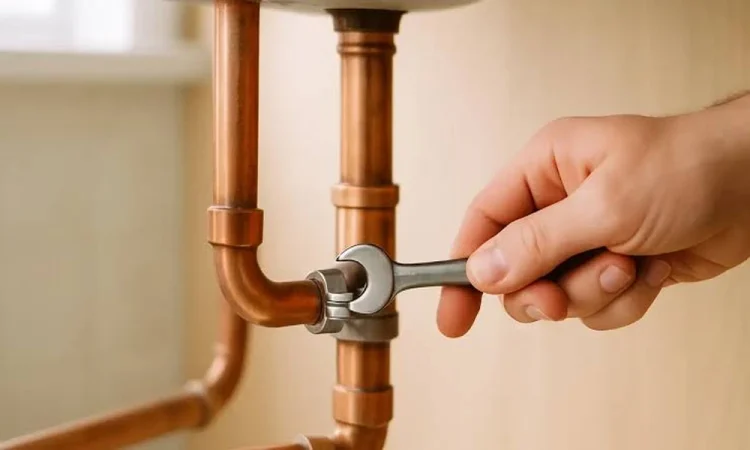

Most plumbing failures announce themselves long before water reaches the floor. A pipe bangs when the washing machine stops filling. A drain gurgles after the shower shuts off. A toilet hisses at two in the morning with nobody near it. These sounds fade into the background of daily life, yet each one points to something specific happening inside the walls, under the floor, or at the bottom of the water heater tank.
Once a noise moves from annoying to worrying, it helps to have one number to call. HQ Plumbing runs a phone line that connects homeowners with independent local plumbers for leaks, clogs, water heaters, sewer lines and sump pumps. Same day visits are often possible, and the plumber explains the price before any work begins. Before you pick up the phone, though, it pays to understand what the house is trying to tell you.
That Loud Knock After a Valve Snaps Shut
A sharp bang right after a faucet, dishwasher or washing machine valve closes is called water hammer. Water moving through a pipe carries real momentum. When a fast acting valve stops it suddenly, that energy turns into a pressure spike that travels back through the line and slams the pipe against studs or joists.
The noise itself does no harm. The repeated shock does. Over months it loosens solder joints, stresses compression fittings and wears out the braided supply hoses behind appliances. The usual causes are household water pressure set too high, pipes that were never strapped firmly, or old air chambers that have filled with water and stopped cushioning anything.
A pressure gauge that screws onto an outdoor hose spigot costs very little and settles the first question in seconds. Many plumbing codes treat 80 psi as the upper limit for a home. Readings above that usually mean the pressure reducing valve near the main has failed or was never installed. Small water hammer arrestors fitted at the washer and dishwasher connections take care of most remaining knocks.
Drains That Gurgle Are Gasping for Air
Every drain needs air to flow smoothly, which is why a roof vent pokes through your shingles. When a drain or vent is partly blocked, falling water drags air through the nearest trap instead, and you hear it as a gurgle or glug.
Where the sound shows up says a lot. One sink gurgling while a nearby tub drains usually means a partial clog in the branch line those two fixtures share, or a vent choked with leaves, a bird nest or, in colder places, a cap of frost. Gurgling at the lowest fixtures in the house is more serious. A toilet that bubbles while the washing machine empties is one of the classic signs of trouble in the main sewer line, where tree roots, a sagging section of pipe or years of grease buildup slowly narrow the path.
A sewer smell alongside the gurgle matters too. It often means traps are being siphoned dry, which lets gas from the sewer drift back into living spaces.
A Steady Hiss Means Water Is Going Somewhere
Toilets are the usual source of a hiss that never quite stops. A worn flapper lets water seep into the bowl, the tank level drops, and the fill valve kicks on briefly to top it off. That phantom refill can happen every few minutes, all day and night. A few drops of food coloring in the tank will tell you for sure. If color shows up in the bowl within fifteen minutes without flushing, the flapper is leaking.
These small leaks add up faster than most people expect. The EPA’s WaterSense program estimates that leaks in an average home can waste close to 10,000 gallons a year, and about one home in ten loses 90 gallons or more every single day.
A hiss coming from inside a wall or floor when no fixture is running is a different matter. That points to a pressurized supply line that has developed a pinhole or a cracked fitting, and it rarely gets better on its own. Some sounds belong in the category where you shut the main valve first and ask questions afterward.
- Running water you can hear behind drywall or under a slab while everything is off
- Hissing or spraying from the relief valve on the side of the water heater
- A sudden roar from a supply hose behind the washer or under a sink
- Splashing in the basement or crawl space during heavy rain
Knowing where the main shutoff valve sits, and making sure it actually turns, is worth ten minutes on a calm weekend.
Popping and Rumbling From the Water Heater
A tank water heater that crackles, pops or rumbles like a distant kettle is almost always dealing with sediment. Minerals in the water settle to the bottom over time. Water trapped beneath that crust overheats, flashes into small steam bubbles and bursts upward through the layer, which is the sound you hear.
Sediment cuts efficiency, overheats the steel at the base of the tank and shortens the heater’s working life. Homes with hard water build it up faster. Draining a few gallons from the valve at the bottom once a year helps, although a tank that has gone years without flushing may need a professional to break up the hardened layer safely.
Tankless units collect scale too, though it tends to show up as error codes, fluctuating temperature or reduced flow rather than noise. Most manufacturers call for periodic descaling, and skipping it can affect warranty coverage.
One sound from a water heater deserves immediate attention. Hissing or dripping from the temperature and pressure relief valve means the tank is releasing pressure it should not be building. Thermal expansion in homes without an expansion tank and thermostats set too high are common culprits.
Squeals, Whistles and a Low Hum
High pitched whistling when a faucet opens usually comes from a worn washer, a loose cartridge or a shutoff valve under the sink that was left partly closed. A toilet that squeals while refilling typically needs a new fill valve, an inexpensive part that takes minutes to swap.
A steady hum or vibration through the pipes can point to water pressure that is too high. In homes on private wells, it may come from a pump cycling on and off more often than it should, which often signals a waterlogged pressure tank.
When the Warning Sign Is Silence
Sometimes the problem is the noise you stop hearing. A sump pump that never kicks on during a downpour may have a stuck float or a burned out motor. Pouring a bucket of water into the pit before storm season shows whether it starts and empties properly. A water heater that has gone silent alongside lukewarm showers might have a failed element or a pilot that will not stay lit. Even a drip that suddenly stops can mean the leak has found a new path inside a cabinet or wall instead of fixing itself.
Turning a Strange Sound Into a Useful Call
Plumbers diagnose faster when you describe what you heard in plain detail. Note when the sound happens, which fixture sets it off, how long it lasts and whether it comes with a smell, a damp patch or a jump in the water bill. A short phone video that captures the audio can save a lot of guesswork once someone arrives.
Ask for the estimate in writing before work starts, and take a moment to confirm the plumber’s license with your state’s licensing board, since requirements vary from place to place. Most of the noises inside a home are cheap to fix when caught early and expensive when ignored, so the best habit is simply to listen and act while the house is still only making noise.