
Spring in the Twin Cities follows a familiar pattern. The snowpack melts while the ground a few inches down is still frozen. The meltwater can’t soak in, so it moves sideways toward basement walls. Then the first thunderstorms roll through, often with wind strong enough to knock out power for a few hours. Through all of this, a small pump in a basement corner is expected to keep things dry.
Most of the time it does. Mark’s Plumbing Service & Repair is a family company based in Plymouth that has served Minneapolis, St. Paul and the nearby suburbs since 1905. It installs primary sump pumps along with backup sump systems, and offering both reflects how basements in this region actually work. A single pump plugged into a single outlet is one failure away from wet carpet, ruined drywall and a long weekend of cleanup.
Few homeowners think about the pit until it overflows, so it helps to know how these systems fail and how a backup changes the outcome.
The Night a Single Pump Isn’t Enough
The most common failure has nothing to do with the pump itself. Heavy rain and power outages tend to arrive together, so the pump loses power exactly when the water table rises fastest. A basement can go from dry to flooded in a few hours with no electricity running to the pit.
Mechanical trouble comes next. Float switches stick when debris settles in the pit or when a tether float catches on the pit wall. A switch that won’t rise means the motor never starts, even though the power is on and the pump is fine.
Capacity matters too. A pump that keeps up during a light April shower can fall behind during a downpour on top of snowmelt. Motors also wear out. Many primary pumps last somewhere between seven and ten years. A pump that runs constantly in a wet yard will usually fail sooner than one that runs a few times a month.
Winter causes its own problems. A discharge line that runs across the yard can freeze solid in January. When it does, the pump pushes against a blocked pipe and either burns out or sends water back into the pit.
Two Ways to Build a Backup
A backup system is a second line of defense. It doesn’t replace good maintenance of the main pump. There are two main types, and each fits a different kind of house.
Battery Backup Pumps
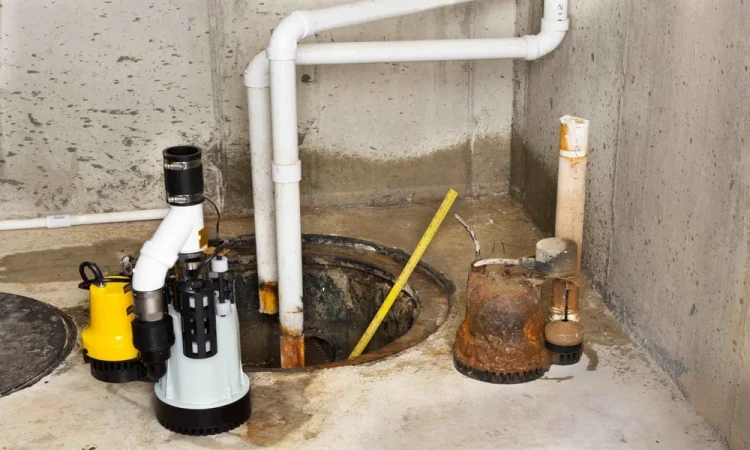
A battery backup is a separate pump that sits in the same pit, usually mounted a little higher than the primary. It runs on a sealed deep cycle or AGM battery that a charger keeps topped up. When water rises past the primary pump’s normal shutoff point, the backup float trips and the second pump starts moving water.
How long it runs depends on the battery’s size, the pump’s draw and how often water flows into the pit. A fully charged battery might cover a short outage easily but run low during a long storm with heavy inflow. The batteries also age. Most need replacing every few years, and many units include an alarm that sounds when the battery weakens or the backup turns on. That alarm is often the first sign that something went wrong with the primary pump.
Water-Powered Backup Pumps
A water-powered backup has no battery at all. It uses the pressure of municipal water to create suction that pulls water out of the pit. It runs as long as city water pressure holds, so a long blackout won’t drain it the way it drains a battery.
There are tradeoffs. It uses treated city water while it works, so it adds to the water bill during heavy use. It only works in homes on a municipal supply with adequate pressure, which rules it out for houses on private wells. Plumbing codes generally require a backflow preventer on the supply connection, so that pit water can never be drawn back into the drinking water lines.
Some homeowners go further and pair a backup pump with a standby generator. That makes the most sense in homes with finished lower levels that hold bedrooms, offices or expensive equipment.
Where the Discharge Ends Up
Moving the water out of the pit is only half the job. Where it goes after it leaves the house matters to homeowners and to their cities.
Across the metro, sump pumps are not allowed to discharge into the sanitary sewer. Clear water that gets into sewer pipes this way is called inflow, and during storms it can overload the system and push sewage back up into basements, sometimes in other people’s homes. The Metropolitan Council’s inflow and infiltration program pushes communities to cut this extra flow, and private connections like sump pumps and foundation drains are a large share of the problem. Several cities run their own inspection programs to find improper connections, including Maplewood’s sump pump program, which explains where a sump pump should discharge and what an improper connection looks like.
A good outdoor discharge sends water far enough from the foundation that it doesn’t seep straight back toward the pit. It should drain toward a grassy area or swale, not onto a sidewalk where it will freeze or onto a neighbor’s lot. Many homeowners add a freeze protection fitting near the house. If the line outside freezes, the fitting lets water escape there rather than backing up into the basement.
A Five Minute Check Before Thaw Season
Late winter is a good time to test the whole setup, before the melt starts. The routine is simple.
- Lift the lid and look for silt, gravel or debris around the float and the pump intake.
- Pour a bucket of water slowly into the pit and watch the primary pump start and shut off on its own.
- Keep pouring until the water rises above the primary float and confirm that the backup kicks in.
- Check the battery’s age and charge indicator, or for a water-powered unit, confirm the supply valve is open.
- Walk outside and make sure the discharge pipe is clear, attached and pointing away from the house.
If the pump hums without moving water, cycles every few seconds or stays silent, have it looked at before the first big storm.
Knowing When the Old Pump Has Done Its Time
Age is the clearest sign. A pump approaching ten years old is living on borrowed time, even if it still starts. Other signs show up more slowly. The motor gets louder than it used to, it runs longer to empty the same amount of water, or it rattles because the impeller is wearing out. Rust on the housing or a pump that trips the breaker are also good reasons to replace it.
Replacing the primary pump is also a good time to add or upgrade the backup, since the pit is already open and the discharge piping can be checked at the same time. A cast iron primary pump with a properly sized battery or water-powered backup gives a basement two independent ways to stay dry. That redundancy is what lets a homeowner sleep through a spring storm instead of checking the basement with a flashlight at two in the morning.
A dry basement is rarely a matter of luck in this climate. It comes from a working pump, a backup ready for the day the power goes out, and a discharge line that sends the water somewhere useful. Each piece is simple. Together they decide whether thaw season passes without trouble or ends with a call to the insurance company.